MIGRALEVE™ PINK
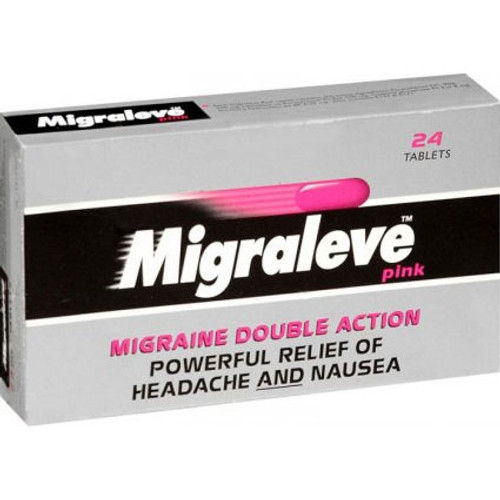
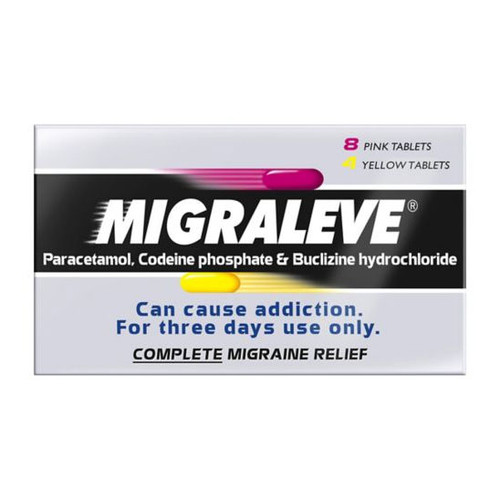
MIGRALEVE™ Pink contains paracetamol and codeine, to treat your head pain, together with buclizine, to relieve nausea. If taken at the first sign of a migraine, MIGRALEVE™ Pink can prevent an attack from developing further. If further treatment is required, this can be followed with MIGRALEVE™ Yellow.
For three days use only. Can cause addiction. This medicine can make you feel sleepy. Do not drive while taking this medicine until you know how it makes you feel.
Available in boxes of 12 and 24 tablets.
Ask your pharmacist for more detai
DOSAGE INSTRUCTIONS:
Children under 12 years:
This medicine is not recommended for children under 12 years old. Consult your doctor.
Children 12 - 14 years:
Swallow 1 Migraleve Pink tablet at the first sign of a migraine attack. If the migraine persists, then take 1 Migraleve Yellow tablet 4 hours after the Pink dose and then every 4 hours.
Do not take more than 4 tablets (1 pink and 3 yellow) in a 24 hour period. If symptoms persist for more than 3 days, talk to your doctor.
Adults and Children 15 years and more:
Swallow 2 Migraleve Pink tablet at the first sign of a migraine attack. If the migraine persists, then take 2 Migraleve Yellow tablet 4 hours after the Pink dose and then every 4 hours
Do not take more than 8 tablets (2 pink and 6 yellow) in a 24 hour period. If symptoms persist for more than 3 days, talk to your doctor.
REMEMBER:
Do not take less than four hours after taking other painkillers.
Always start with Migraleve Pink tablets.
Swallow tablets with a glass of water.
Do not take more than the stated dose below.
Do not take for more than 3 days. If you need to use this medicine for more than three days you must speak to your doctor of pharmacist.
Shipping charges mainland GB zone1
| Value | Weight | Delivery Charge |
| Over £49.00 | Any Weight | FREE |
| Under £49.00 | No weight limit | £4.50 |
| Under £49.00 | Under 250 grams | £3.49 |
Most orders are despatched the same day and standard delivery is 3 to 5 working days from despatch. FAST Expedited options are available at extra cost - these usually arrive in 24-48hrs from dispatch but delays are possible during busy periods.
Postcodes outside of Zone 1 (including some areas within mainland UK) may incur extra carriage charges due to surcharges imposed by the couriers. These will be calculated on the website at the checkout.
NB: Orders placed with faster delivery must be placed before 13:00 to ensure same day dispatch (excluding weekends and bank holidays). Please also check on the product page that the items ordered show 'In Stock' otherwise your order will be delayed until the stock becomes available, which in most cases will only be 24hrs.
Estimated "Usually shipped in" information is shown against most products
Overseas orders
We no longer send goods outside of the UK.
Prescription Items
Prescription items will be sent on receipt of a legally valid signed and dated prescription.
Pick up
We offer a pickup service for orders placed over the phone.
Please ring us on 01833 641112 for more information.
Refrigerated Items
- Refrigerated lines Packaging Cost: Despatched with Woolcool Refrigerated Packaging for £7.50.
- Receipt Required: Someone must be available to receive the delivery. Woolcool packaging is designed for temperature-controlled goods, so parcels cannot be left unattended.
- Immediate Refrigeration: Upon receipt, refrigerate the contents immediately to ensure your food or medicine remains at the correct temperature.
- Failed Delivery Attempts: We are not responsible for the cost of replacements if a delivery attempt fails due to the absence of someone to receive it.
We want you to be completely satisfied with any purchase. If not any item* can be returned to us within 14 days of receipt for exchange or refund Please give us a ring for a returns number on 01833 641112 or alternatively email sales@hyperdrug.co.uk to obtain a returns number.
*Due to legal requirements medicines may not be returned except to correct an error in despatch or in response to an "official recall". If an item is believed to be faulty it should be returned for inspection and it may be necessary to forward it to the manufacturers for testing before replacements or refunds can be authorised. This does not infringe legal rights. Please contact our customer services for a "Returns Number" which must appear on the outside of the package or it will not be accepted. We advise customers to use an insured method of shipping and to retain proof of despatch. We may refuse returns on products specially obtained or manufactured to order. Items must be returned unsoiled and unused and sent adequately packed and carriage paid.